
If you love the intense scents of citrus, berries or tropical fruit and want to enjoy a fruity coffee at home, the world of coffee can offer you some surprising experiences. Many consumers associate coffee exclusively with notes of cocoa, hazelnut or roast, but certain origins and processing methods can develop incredibly fruity aromas. So the question is: which coffee should you choose to get a genuinely fruity cup?

What does “fruity coffee” mean?
When we talk about a fruity coffee, we do not mean a flavoured coffee. Fruity notes are natural aromas present in the bean and come from a combination of:
- botanical variety;
- growing territory (terroir);
- altitude;
- processing method;
- roasting method.
A fruity coffee can recall:
- lemon and bergamot;
- orange and mandarin;
- peach and apricot;
- strawberry and raspberry;
- blueberry;
- mango and tropical fruit.
Ethiopia: the paradise of fruity coffee
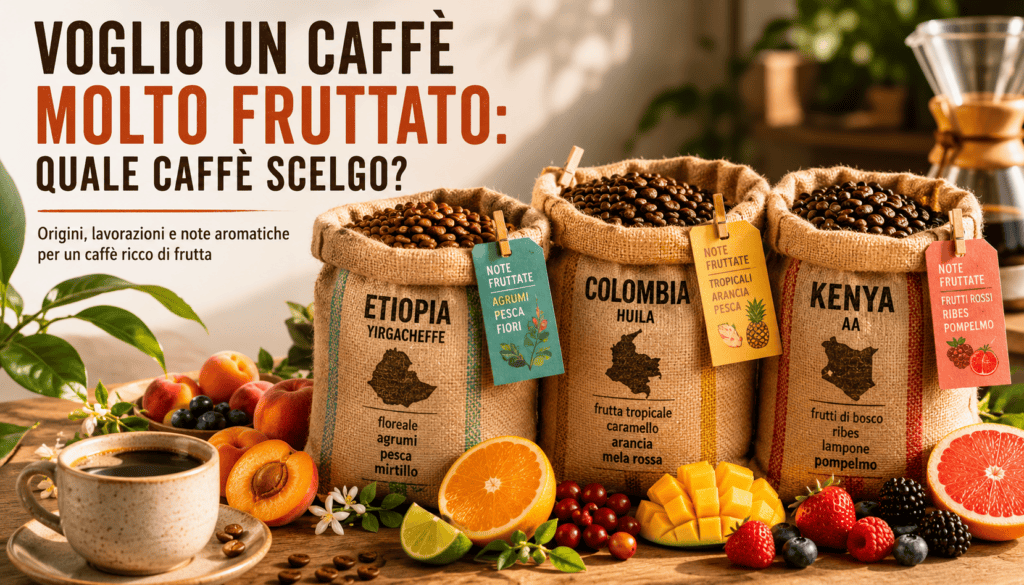
If your goal is to get the most out of the fruit component, the first origin to consider is Ethiopia.
The regions of:
- Yirgacheffe
- Sidamo
- Guji
are famous for producing coffees rich in floral and fruity aromas, often characterised by notes of citrus, peach, jasmine and tropical fruit. Altitude plays a decisive role here: the slow ripening of the cherry at over 1,900 metres concentrates sugars and acids, and it is exactly that concentration that the cup then reveals as fruit.
Many enthusiasts describe some Ethiopian coffees as surprisingly similar to a fruit-flavoured tea, because of their complexity and lightness.
Natural or washed? Processing makes the difference
The post-harvest process hugely influences the aromatic profile.
Washed coffee
It generally produces a cup that is:
- cleaner;
- brighter;
- citrusy;
- elegant.
Notes of lemon, bergamot and white flowers come through particularly clearly.
Natural coffee
During drying the bean stays inside the cherry, absorbing part of the sugars and aromatic compounds of the fruit.
The result is a cup that is:
- sweeter;
- more intense;
- rich in red fruit aromas;
- with hints of strawberry, blueberry and tropical fruit.
For anyone looking for an explosion of fruit in the cup, the natural method is often the better choice.
Colombia and Kenya can surprise you too
Ethiopia is not the only interesting origin.
Colombia
Some high altitude plantations offer aromatic profiles that recall:
- tropical fruit;
- red apple;
- peach;
- ripe fruit.
Modern processing is also pushing the aromatic limits towards ever more surprising levels.
Kenya
The best Kenyan coffees are famous for their lively acidity and for notes that recall:
- blackcurrant;
- raspberry;
- grapefruit;
- berries.
They are often among the coffees most appreciated by lovers of intense, bright flavours.
Which roast should you choose?
If you want to preserve the fruit component, go for a light or medium-light roast.
A roast that is too dark tends to cover the most delicate aromas with hints of:
- bitter cocoa;
- intense caramel;
- roast;
- smoke.
Specialty roasters generally use roast profiles designed to bring out the original characteristics of the bean. In practice this means stopping the roast shortly after first crack, before the sugars caramelise so far that they flatten the acidity on which every fruity coffee depends. It is a narrow window, and it is the reason the same lot can taste like blackcurrant in one roastery and like plain dark chocolate in another.
Espresso or filter?
Fruit emerges differently depending on the brewing method.
Espresso
- greater intensity;
- greater body;
- concentrated aromas.
V60, Chemex and filter
- greater aromatic clarity;
- more evident acidity;
- more legible fruity notes.
To fully appreciate a very fruity coffee, many professionals recommend filter brewing.
The ideal choice for anyone looking for a fruity coffee
If you want to play it safe, look for a coffee with these characteristics:
- Ethiopian origin (Yirgacheffe, Guji or Sidamo);
- natural processing;
- light roast;
- filter preparation or a light espresso.
This combination often delivers aromas recalling berries, citrus and tropical fruit, offering one of the most fascinating experiences the world of coffee has to give.
Conclusion
A very fruity coffee is not an exception, but the result of a precise combination of origin, variety, processing and roast. If you are used to the classic cocoa and hazelnut profiles, exploring a good Ethiopian natural could completely change the way you experience your coffee break.
Next time you choose a blend or a single origin, try looking on the label for words such as “berries”, “citrus”, “peach” or “tropical fruit”: you might discover a completely new aromatic universe.
Looking for a coffee with surprising fruity notes? On Nerocaliente you will find deep dives, guides and advice for choosing the beans best suited to your taste and getting the most out of every extraction. Discover the world of aromas hidden in coffee and find your ideal cup. Subscribe to our newsletter and follow us on social to stay up to date.

