
Coffee extraction time is one of the most important parameters in making a good espresso. Even using a high quality coffee and a professional machine, a few seconds of difference can turn a balanced drink into a coffee that is too sour, bitter or lacking in body.
Knowing how to control coffee extraction time means having control over the final result in the cup. It is one of the first aspects every barista, but also every coffee enthusiast, should learn to assess.

What is coffee extraction time?
Extraction time is the interval that passes from the start of the pour until the desired quantity of espresso is reached.
During this period the hot water passes through the puck of ground coffee, dissolving hundreds of compounds responsible for aroma, taste, sweetness, acidity and body.
Every second changes the chemical composition of the drink.
Why is time so important?
Coffee extraction happens in phases.
In the first seconds mainly organic acids and light aromatic substances are released. Then come the sugars, which give sweetness and balance. Only in the final phases are tannins and more bitter compounds extracted. This sequence is the reason why timing matters more than almost any other variable: the same puck, the same water and the same machine will hand you three completely different drinks depending on whether you stop at fifteen, at twenty-seven or at forty seconds. Nothing has changed except how long the water was allowed to work.
If the process stops too early or lasts too long, the natural balance of the coffee is compromised.
When extraction is too short
An extraction that is too fast produces an under-extracted espresso.
The most common symptoms are:
- sour, sharp taste;
- little sweetness;
- light body;
- very short aftertaste;
- pale crema with little persistence.
The causes can be:
- grind too coarse;
- insufficient coffee dose;
- uneven tamping;
- excessively rapid water flow.
When extraction is too long
If instead the water stays in contact with the coffee for too long, over-extraction occurs.
The result is an espresso that is:
- very bitter;
- drying on the palate;
- with woody or astringent notes;
- not very aromatic;
- with a persistent but unpleasant aftertaste.
The most frequent causes are:
- grind too fine;
- excessive dose;
- irregular pressure;
- blocked filter basket.
What is the ideal coffee extraction time for an espresso?
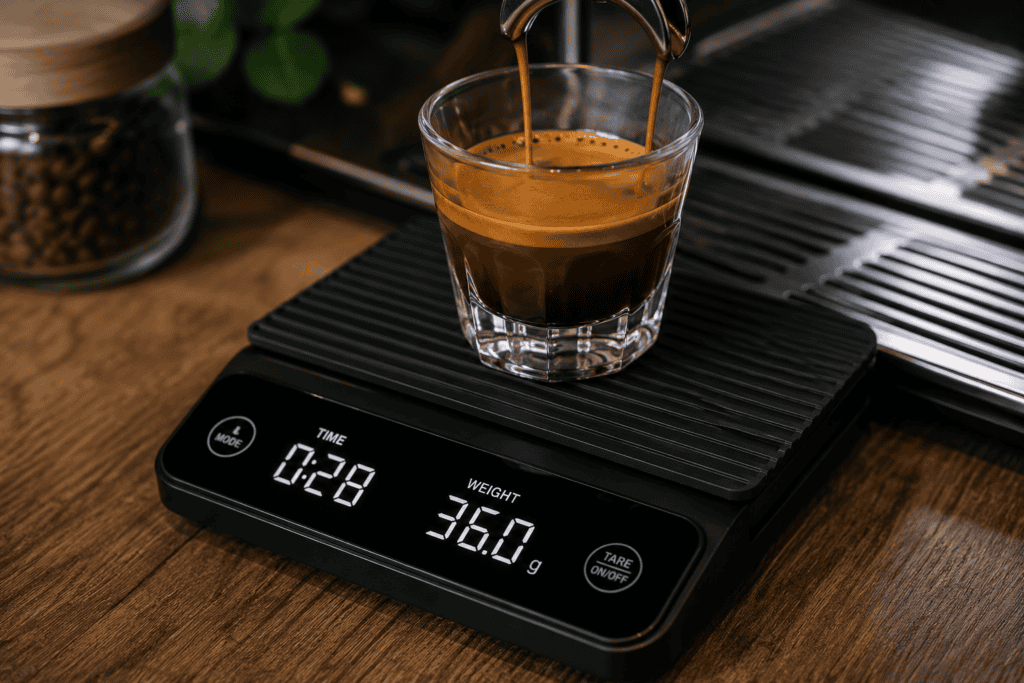
There is no universal value valid for every blend, but as a general reference an extraction time between 25 and 30 seconds is considered optimal, to obtain around 36-40 grams of drink starting from a dose of about 18-20 grams of coffee(a 1:2 ratio).
Naturally every coffee may require small adjustments depending on:
- roast level;
- origin of the beans;
- ambient humidity;
- freshness of the grind;
- characteristics of the espresso machine.
Time should never be considered on its own
One of the most common mistakes is trying to hit a given number of seconds without observing the other parameters.
A good espresso comes from the balance between:
- extraction time;
- grind size;
- coffee dose;
- yield in the cup (brew ratio);
- water temperature;
- extraction pressure.
Changing just one of these elements inevitably affects all the others.
How to improve control of the extraction
To get consistent results it helps to follow a few simple habits:
- always use a precision scale: I recommend this one
- time every extraction;
- grind the coffee immediately before use;
- distribute the grounds evenly. For this you can use the WDT tool
- tamp consistently. Here I recommend the Normcore tamper with preloaded springs
- note down any changes, so you understand which adjustments produce the best results.
Professionals also check these parameters regularly during the day, because temperature and humidity can change the behaviour of the grind. A bar that dialled in perfectly at eight in the morning can be running three or four seconds fast by midday, simply because the room has warmed up and the beans have lost a little moisture. This is why a shot is never set once and forgotten: it is re-checked, and the timer is what tells you when something has drifted.
Coffee extraction time changes with the brewing method too
It is not only espresso that requires attention to timing.
Every method has its own ideal range:
- Espresso: around 25-30 seconds.
- Moka: around 4-5 minutes in total.
- V60: around 2:30-3:30 minutes.
- Chemex: 4-5 minutes.
- French Press: 4 minutes.
- AeroPress: from 1:30 to 2:30 minutes, depending on the recipe.
This shows how time is one of the fundamental tools for controlling extraction, whatever the method chosen.
Conclusion
Controlling coffee extraction time means understanding the language of coffee.
Every second affects the amount of substances that end up in the cup and, as a consequence, the final taste. Learning to observe this parameter lets you quickly correct any defects and obtain a sweeter, more balanced espresso, rich in aromas.
If you want to improve the quality of your coffee, the timer is one of the simplest and most effective tools you can use. Often a few seconds are all it takes to make the difference between a mediocre espresso and a truly memorable cup.

